Blog

My Personal Experiences & Who Needs Detox?

For the past five years, I’ve done this program every spring. Somehow, I’ve felt that it was exceptionally difficult this year. This time around, I embarked on this program immediately after an overseas trip, and I was fighting a massive flu simultaneously. Regardless, I stood strong on my resolve and carried through 21 days.

Highlights of my experiences were:

  • Day 2: Massive headaches, nausea, body aches, eye pains (all of these are herxheimer reactions when the body is dumping toxins)
  • Day 3-7: Excessive sleepiness, dry mouth, skin eruptions.
  • Day 8-10: Sugar cravings, especially for carbohydrates.
  • Day 11-21: Increased bowel movements, increased urination, do not feel hungry, aversion to all forms of sugar including sweet fruits.

Benefits I’ve Experienced


  • weight gainExcellent lipid panel: My cholesterol level went down to 130 mg/dL from 200 mg/dL (I did blood work right before and after the program)
  • Weight loss especially around the midsection (I lost only 4 lbs as I am kind of under-weight; most people lose 7-15 lbs)
  • Clearer skin and a far less hair loss
  • No sugar cravings
  • No more bloating and gas
  • Better sleep
  • Much higher energy
  • Most importantly, emotional stability and positive attitudes


Who Needs Detoxification?

fatty-liverI can say with conviction that everyone needs to detoxify their body regularly as we all are continuously exposed to external and internal toxins. This program will be extremely helpful for those who have: blood pressure issues, fatty liver, kidney malfunctions, frequent urinary tract infections, food and environmental allergies, digestive issues including ulcer or irritable bowels, hormonal disorders, anxiety and moodiness, arthritis, chronic fatigue, and sleep disorders. Well, I think that covers pretty much everyone.


The 21-day Purification/Weight Loss Program

Known to be one of the most effective weight loss/detoxification program, the Standard Process 21-day protocol has been around for decades. Unlike numerous weight-loss programs that promote a quick weight loss–most people gain back their weights plus many extra pounds, this program truly “resets” one’s metabolic rates and make people adopt completely different eating patterns.

The dietary modifications throughout the Standard Process program consist of:

  1. unlimited fresh or frozen vegetables and fruits and preferably twice as many vegetables as fruits (nothing else is allowed for the first 10 days)
  2. at least 64 oz of water a day.
  3. After day 10, ½ cup of cooked lentils or brown rice along with a small portion of protein (poultry or fish) is allowed.
  4. Participants consume a protein–based shake as 2 or 3 times per day.
  5. Supplements designed to cleanse the liver, kidneys, small and large intestines.

For detailed explanation of the program, please visit: https://www.standardprocess.com/Products/…/Patient-Purification-Program-Guide

21-day

The whole program is designed to release toxins gradually and safely. Regardless how much we try to eat clean and healthy, our bodies are loaded with toxins. Naturally occurring toxins that build up in the body can contribute to:

  • Food cravings and weight gain
  • A stuffy feeling in the head
  • Fatigue or difficulty sleeping
  • Indigestion and other temporary gastrointestinal upset
  • Reduced mental clarity
  • Low libido

Do you want to Detox your body?

Amazing Benefits of 21-day Detoxification

I just finished a 21-day detoxification/purification program. Although it was a tough battle, the benefits were so huge that I’ve decided to write about my personal experiences. Hopefully, the readers will be encouraged to try this well-structured, scientifically-proven, and truly transformative program. If you suffer from chronic bloating, fatigue, brain fog, joint pains, hot flashes, irregular bowel movements, moodiness, poor sleep, sugar cravings, cannot-lose-weight-no-matter-what, this program is for you.

How to Proceed with Towel Exercise

Just like all other physical exercises, this exercise program needs consistency and persistence. In the beginning, some pain and uneasiness are expected, especially when you have tight sacrum and shoulders. If you cannot withstand for five minutes, it’s OK as you can gradually increase the length of time. Do not continue if pain persists, but the level of uneasiness will decrease dramatically as the spine adjusts itself during the course of 5 minutes. Chronic neck pain can be reduced by placing the towel underneath the cervical spine. You can also put the towel under the upper and mid thoracic area to release tightness on the upper spine and shoulders.

Do not rise up quickly as this exercise. After the exercise, roll to your side, and sit up slowly to make sure your “adjusted” spine position will withhold.towel exercise

The developer of this exercise claimed that this exercise will optimize one’s metabolism by letting the spine adjust itself to an optimal position (hence losing weight), strengthen one’s core (lose the belly fat), improve digestive functions, calm the central nervous system, and strengthen one’s hormonal production.  In a nutshell, there’s no reason not to do this exercise if you have lower back pain.

Please share with me about your experiences with this exercise program. I am particularly interested in the effects of this exercise in weight control.

How to do Towel Exercise

Things You Need for This Exercise

  • A large towel
  • A strong string, rope, or sturdy rubber bands
  • A flat surface
  • Five minutes of your day (three times a day for acute lower back pain)

Here’s How It Works  

  1. Roll the towel as tight as you can so that it is 15 inches long and 4 inches thick 
  2. Tie the towel with the string or rubber bands to keep it well-woundtowel (1) 2
  3.  Lie on a flat surface (hardwood floor is best, a yoga mat or blanket on the floor is OK;  not on a bed or a mattress)
  4. Place the towel in the lower part of your back, below the navel line
  5. Align your legs with your shoulders and try to touch the big toes together, looking inward
  6. Stretch your arms upward and downward by placing your pinky fingers togethertowel 3
  7. Close your eyes and relax for five minutes. The position looks like this.towel 4

Release Back Pain with Lying on the Floor

Last week, after an 11-hour flight from South America, I had such an acute lower back pain that I haven’t experienced in a long time. Since I was too tired to do anything to relieve the pain, I tried Japanese towel method that I use occasionally. The results were so astounding that I am compelled to share this method. 

Japanese 5-Minute Exercise

This technique, pioneered by Dr. Toshiki Fukutsudzi of Japan, became extremely popular in Japan and other parts of Asia about 10 years ago. More than 6 million copies of his book was sold. Originally promoted as a fast way to “lose weight without diet,” this exercise protocol has been catching up in the western world for the last few years. I cannot testify anything about how effective this exercise is with regard to “weight loss,” although I can personally vouch for the efficacy of this program in lesseningtowel5-1 acute/chronic lower back pain associated with herniated lumbar disc, sciatica, sacrum and pelvic tightness. Those who suffer from chronic neck pain can also benefit from this simple, easy method. The beauty of this method is it requires almost no effort from participants, except lying flat on the floor for 5 minutes.

How to Perform “bloodletting”?

Where Do You Need to Prick?

For stroke-like symptoms, traditional Chinese medicine suggests puncturing the finger tips of all 10 fingers. In my opinion, it’s a bit too much; puncturing the tip of middle finger is sufficient. Puncturing both right and left finger tips can be beneficial, but the key point to puncture is the LEFT middle finger tip. This point is called Pericardium 9 (Zhong Chong, Chinese Character 中衝, meaning Central Hub). As shown in the picture, the pericardium meridian starts right outside of the heart (PC1) and ends at PC9 at the middle finger tip. (Note: The pericardium is two thin layers of a sac-like tissue that surrounds the heart, holds it in place and helps it work.)pericardium-meridian

What do you need for bloodletting?

Sterilized medical lancets, Alcohol swabs for sterilization, Sterilized cotton balls, Biohazard trash container, First-aid cream or gel, and First-aid bandages.

How to do bloodletting

Swab the tip of the middle finger with alcohol, then insert the lancet quickly in a shallow depth. Those with a very high blood pressure may experience blood shooting out as soon as lancets are inserted (this will drop blood pressure immediately). Some may have to squeeze out the finger tips. Elicit a few drops of blood. Absorb the blood with sterilized cotton, and dispose in the biohazard trash container along with the used lancets. Make sure bleeding stops completely by pressing hard with sterilized cotton ball. Apply first-aid cream or gel, or place a band-aid on the points that are bled to prevent infection, and then wash your hands.

The frequency of bleeding depends upon the patient’s medical condition. If the patient has more than a few symptoms of a TIA on a regular basis, bleeding can be performed once a day until the symptom abates. If the patient has a mild condition, bleeding can be done 1-2 times per week.

For nutritional support, I would highly recommend a supplement called “Cardo-Plus” produced by Standard Process. I would love to hear from you if you would practice bloodletting and what kind of results you have experienced.

For general health of the heart, I cannot think of anything better than “meditation focusing on slow breathing.”  If you suspect you have some TIA symptoms, think of it as if your “inner self” is calling for your attention.

“Bloodletting” to Prevent Mini-Stroke?

Most of stroke prevention programs are geared to lowering cholesterol level, modest exercise, and modified diet. All of these are good for not only heart diseases, but overall health of all ages. But is there a really impressive, well-proven method to prevent strokes? Well, there is an ancient healing technique called “bloodletting.”  My late father had never failed carrying a few medical lancets with him, especially when he had to take a long flight. In many Asian countries, “bloodletting” has long been considered one of the most effective measure in preventing and treating stroke-like conditions.

What is “Bloodletting”?

bloodlettingBloodletting literally means let the blood coming out by puncturing some part of the body. According to Chinese medicine, bloodletting has many functions: speeding up the blood flow, transforming stagnation and clearing internal heat (associated with the heart). Surprisingly, this particular technique has been used throughout the world (from the land of Hippocrates, Mid-eastern countries, and Asian countries) well into the 20th century. These days, most Chinese medical doctors and acupuncturists shun away from bloodletting, mainly due to blood-borne disease scares (The state of California prohibits bloodletting).
Numerous research studies (mostly conducted in China) have been published asserting the efficacy of bloodletting. Not only preventing strokes and treating post-stroke symptoms, bloodletting has widely been used in treating tonsillitis, severe earaches, asthma, febrile disease, hypertension, back pain, and even eczema.

How to Prevent for a Mini-Stroke?

What is Mini-Stroke?

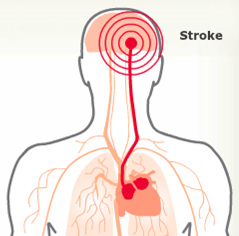
A “mini-stroke” or “transient ischemic attack” (TIA) occurs when there is a temporary drop in the blood supply to the brain. It can be caused by a variety of reasons–the most notable cause is underlying weakness of the heart. Usually, the patient experiences stroke-like symptoms, although they don’t last very long (sometimes only a few minutes to few hours). A TIA doesn’t cause any permanent damage, however, the scary part of  a TIA is that between 10 and 15 percent of TIA patients have a full-blown stroke within 3 months.

stroke_graphicMost people don’t even recognize that they experience a mini-stroke. Furthermore, since the symptoms fade away rather quickly, they seldom seek medical help.

Typical symptoms of a TIA include:

  • Face – the face may fall on one side as some of the facial muscles become paralyzed. The patient’s eye or mouth may droop, and they may be unable to smile properly.

  • Arms – arm weakness or numbness might make it hard for the patient to either raise both arms, or to keep them raised.

  • Speech – speech may be slurred and garbled.

Other signs and symptoms of a TIA can include:

  • Dizziness
  • Difficulty talking

  • Difficulty understanding what others are talking about
  • Swallowing Difficulties
  • Very bad headache
  • Paralysis, numbness, or weakness on one side of the body
  • In severe cases, loss of consciousness

If you suspect that you may experience a TIA, It is imperative to seek medical help immediately. So what can be done in addition to conventional western medical treatments?

Why You Need to Squeeze Your Pelvic Floor Muscles

The biggest benefit of squeezing your pelvic floor muscles is to combat annoying, embarrassing and sometimes even depressing urinary incontinence (unintentional leaking of urine). If you follow the protocols given in earlier blog, there’s a good chance incontinence to be cured permanently. Even if you don’t have incontinence, these exercises are extremely useful to prevent it.

For those who are familiar with Kundalini Yoga practices, these exercises are same as chanting Saaattt… while inhaling through your lower abdomen, and Naaammm… while exhaling and squeezing your perineum muscles simultaneously. 

pelvic-images


Now, let’s talk about many other benefits of “squeezing your butt.” This is excellent to:


  • strengthen your bladder and kidney functions
  • support your lower back, actually the entire spine
  • helps your posture
  • lose your belly fat and reduce the waistline (seriously)
  • balance your metabolism
  • increase your energy level substantially
  • possibly fix erectile dysfunctions
  • enhance sexual pleasure 

AND

This may lead to an extraordinary spiritual experience.